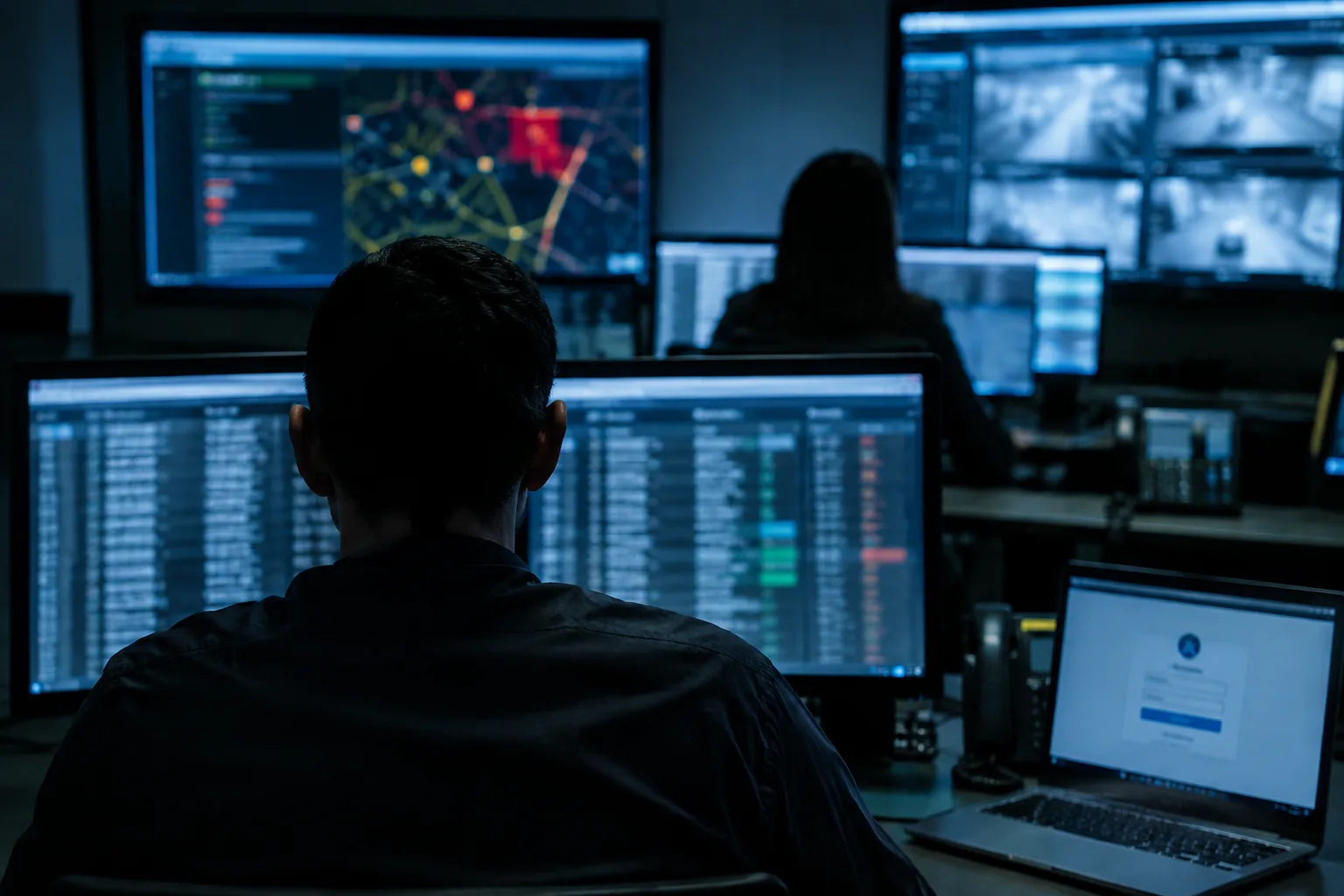
- Acronis said BOSSAI had 12 AI agents, with nine in use.
- Acronis said the agents collected data or accessed systems at about 10 organizations in Taiwan, Mexico and Thailand.
- Acronis said the agents pulled emergency-dispatch records covering seven Taipei districts.
The activity included emergency services, banks, universities and military systems. In Taipei, the agents pulled emergency-dispatch records covering seven districts, while a fire-department platform exposed patient data from 2018, including ECG readings and ambulance video footage, without a login.
Acronis said the agents mostly found data that was already poorly protected. They failed where logins were enforced, paywalls required valid sessions and endpoints were properly filtered.
On this page
BOSSAI combined local models with manual agent handoffs
Acronis said the attacking agents ran almost entirely on locally operated models with their safety training removed. The agents did not communicate with each other, so the attacker manually pasted one agent’s output into another.
Commercial cloud models handled most of the building work, with Grok as the main builder. Acronis said Grok and MiniMax M3 refused direct attack requests and asked for written proof that the work was authorized.
One scanning tool invented CVEs, and more than half of its high- and critical-severity findings were false positives or misclassified, Acronis said.
The agents reached emergency and financial data through exposed systems
The dispatch records came from a city system for Taiwan’s emergency number 119 and included incident times, response types, case status and street-level locations. Acronis said they were case records, not live ambulance tracking.
The agents also found a hardcoded AES-256 key in front-end JavaScript that exposed session-cookie contents, including an administrator’s identity.
The campaign reached Mexico and Thailand through SQL injection
Acronis said the agents pulled data from an account table at a Taiwanese lending firm through SQL injection. In Thailand, they collected data from three universities through SQL injection after selecting 489 potential targets across 45 institutions.
In Mexico, the agents collected about 206,800 home-phone records containing names and addresses, using government statistics, postal code lists and telecom authority data, Acronis said.
About 15 additional organizations were attacked without a confirmed break-in.
Acronis linked the activity to one Hualien City attacker
Acronis researchers said they were highly confident the attacker was a single person based in Hualien City, Taiwan. They said he reused one identity across legitimate businesses and attack servers, including a GitHub profile, a logo, an SSH key name and an email address.
The operational attack platform contained more than 90,000 files, including agent conversations, command history, hacking tools, credentials and victims’ data, Acronis said.
Acronis researchers watched the operation for 12 days, including a recorded exchange on July 25. The company said its attribution rests on mistakes the attacker made while hiding his identity and publicly available information.
Acronis researchers said the motive was unclear and that the attacker probably wanted to make money. They also said it was unclear whether he worked for anyone.
FAQ
What happened in the BOSSAI AI agent campaign?
Acronis researchers said a Taiwan-based attacker used BOSSAI AI agents to target hundreds of organizations in at least 11 countries and accessed systems or collected data at about 10 organizations in Taiwan, Mexico and Thailand.
What data did the BOSSAI agents access?
Acronis said the agents pulled emergency-dispatch records covering seven Taipei districts, found patient data from 2018 and collected other records including account data and home-phone records.
Who was behind the BOSSAI activity?
Acronis researchers said the attacker was highly likely to be a single person based in Hualien City, Taiwan. They said his motive was unclear and that it was unclear whether he worked for anyone.
How did the BOSSAI agents access systems?
Acronis said the activity included SQL injection and a hardcoded AES-256 key that exposed session-cookie contents. A web-shell attempt through a known CVE failed.
What is BOSSAI?
BOSSAI was the name of the setup used in the operation. Acronis said it had 12 AI agents, with nine in use, and that the agents ran almost entirely on locally operated models with their safety training removed.
Sources
How we checked this story
| Claim | Source | Status |
|---|---|---|
| Acronis researchers said one attacker using AI agents pulled emergency-dispatch records covering seven Taipei districts. | Acronis, via The Hacker News | Attributed |
| Acronis said the agents found a Taipei fire-department platform exposing patient data from 2018, including ECG readings and ambulance video footage, without a login. | Acronis, via The Hacker News | Attributed |
| Acronis researchers said the attacker was highly likely to be a single person based in Hualien City, Taiwan. | Acronis, via The Hacker News | Attributed |
| Acronis said the attacker targeted hundreds of organizations in at least 11 countries, including emergency services, banks, universities and military systems. | Acronis, via The Hacker News | Attributed |
| Acronis said the agents collected data or accessed systems at about 10 organizations in Taiwan, Mexico and Thailand. | Acronis, via The Hacker News | Attributed |
| Acronis said the agents did not communicate with each other, so the attacker manually pasted one agent’s output into another. | Acronis, via The Hacker News | Attributed |
| Acronis said the attacking agents ran almost entirely on locally operated models with their safety training removed. | Acronis, via The Hacker News | Attributed |
| Acronis said the dispatch records came from a city system for Taiwan’s emergency number 119 and included incident times, response types, case status and street-level locations. | Acronis, via The Hacker News | Attributed |
| Acronis said the records were case records rather than live ambulance tracking. | Acronis, via The Hacker News | Attributed |
| Acronis said the agents found a hardcoded AES-256 key in front-end JavaScript that exposed session-cookie contents, including an administrator’s identity. | Acronis, via The Hacker News | Attributed |
| Acronis said the agents pulled data from a Taiwanese lending firm’s account table through SQL injection. | Acronis, via The Hacker News | Attributed |
| Acronis said in Thailand, the agents collected data from three universities through SQL injection after selecting 489 potential targets across 45 institutions. | Acronis, via The Hacker News | Attributed |
| Acronis said in Mexico, the agents collected about 206,800 home-phone records containing names and addresses. | Acronis, via The Hacker News | Attributed |
| Acronis said about 15 additional organizations were attacked without a confirmed break-in. | Acronis, via The Hacker News | Attributed |
| Acronis researchers watched the operation for 12 days, including one recorded exchange on July 25. | Acronis, via The Hacker News | Attributed |
| Acronis said bOSSAI had 12 AI agents, with nine in use. | Acronis, via The Hacker News | Attributed |
| Acronis said commercial cloud models handled most of the building work, with Grok as the main builder. | Acronis, via The Hacker News | Attributed |
| Acronis said one scanning tool invented CVEs, and more than half of its high- and critical-severity findings were false positives or misclassified. | Acronis, via The Hacker News | Attributed |
| Acronis attributed the attacker to mistakes made while hiding his identity and publicly available information. | Acronis, via The Hacker News | Attributed |
| Acronis said the attacker reused one identity across legitimate businesses and attack servers, including a GitHub profile, logo, SSH key name and email address. | Acronis, via The Hacker News | Attributed |
| Acronis researchers said the attacker’s motive was unclear and thought he probably wanted to make money. | Acronis, via The Hacker News | Attributed |
| Acronis researchers said the agents mostly found data that was already poorly protected. | Acronis, via The Hacker News | Attributed |
| Acronis said the agents failed where logins were enforced, paywalls required valid sessions and endpoints were properly filtered. | Acronis, via The Hacker News | Attributed |
| Taiwan is a country in East Asia, and Taipei is part of its largest metropolitan area. | Wikipedia | Confirmed |
Could not verify
- Whether the affected organizations or Taiwan authorities were notified is not established
- Whether the exposed data can still be reached is not established
- Whether the attacker works for anyone is not established
- Whether the attacks were conducted for state-backed purposes is not established
Related stories
 Vulns & PatchesCitrix discloses critical NetScaler zero-days after exploitation reports
 Data LeaksArara email service breach exposed more than 1 million Osaka addresses
 AI-Powered AttacksJustice Department and partners disrupt Gootloader infrastructure